

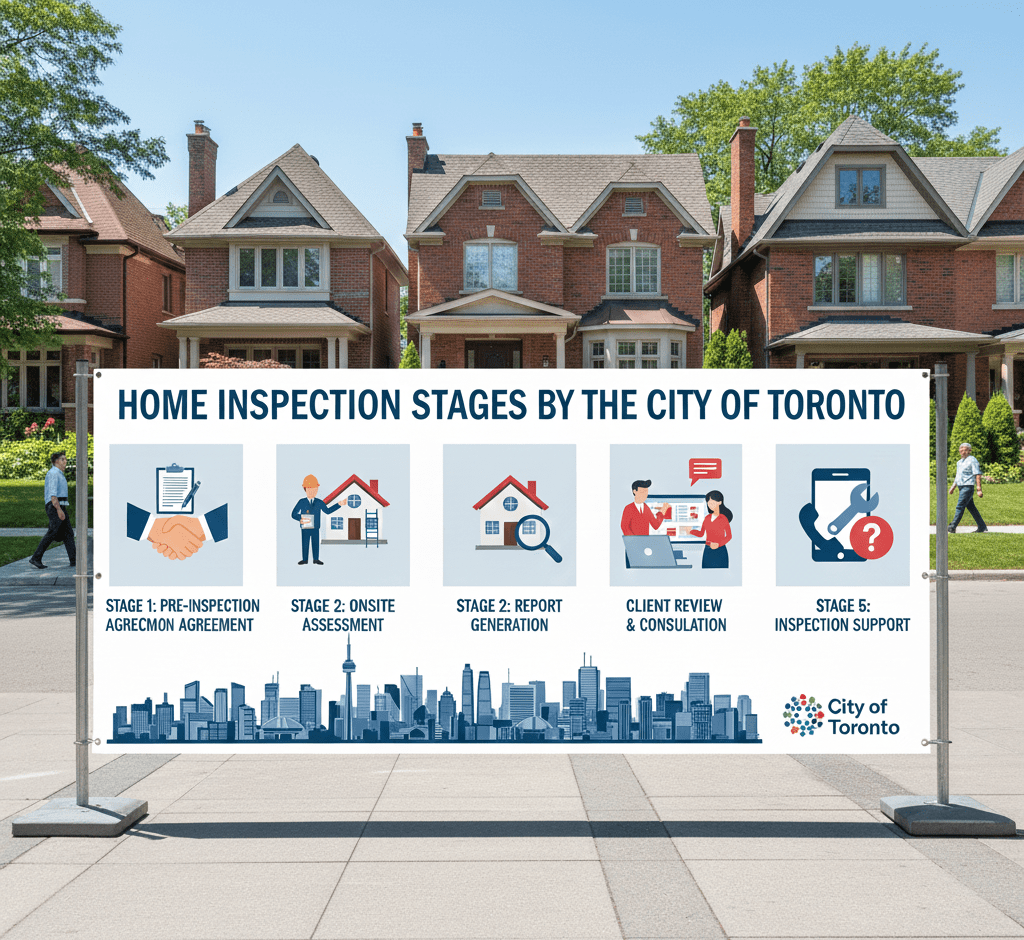
Building inspections are a mandatory part of any permitted renovation project in Toronto. While many homeowners think of inspections as stressful checkpoints, they actually play a crucial role in ensuring your remodel is built safely, legally, and according to the Ontario Building Code (OBC).
At Homi Reno, our team manages this entire process for you from preparing drawings to scheduling inspections so homeowners don’t have to deal with city coordination, delays, or rejections. Below are the six major inspection stages you’ll encounter during a typical renovation.
1. Pre-Construction Review & Permit Approval
Before any demolition or construction begins, the City of Toronto requires a full review of your renovation plans. This first inspection stage isn’t an on-site check — it’s a plan review where city examiners ensure the submitted drawings meet structural, safety, zoning, and OBC standards.
What the City Checks:
- Structural integrity (load-bearing walls, beams, columns)
- Plumbing layouts and venting compliance
- HVAC and mechanical design
- Fire safety and egress
- Zoning restrictions (height, setbacks, use)
Why This Matters for Homeowners:
This phase prevents future surprises. If a renovation design—especially for basements, bathrooms, additions, or garage conversions doesn’t comply, the City will reject the permit or request revisions.
How Homi Reno Handles It:
We prepare accurate drawings, coordinate revisions with designers/engineers, and ensure all documents meet code standards. This speeds up inspector approvals and reduces project delays.
2. Excavation, Footing & Foundation Inspection (If Structural Work Is Involved)
For renovations involving additions, underpinning, garage rebuilding, or structural foundation changes, inspectors must review the foundation stage before concrete is poured.
What the Inspector Looks For:
- Proper excavation depth
- Correct reinforcement placement (rebar)
- Soil conditions
- Footing dimensions and layout
- Waterproofing and drainage planning
Missing this inspection means the project will halt — concrete cannot be poured until approval is granted.
Homeowner Benefit:
If a foundation is built incorrectly, fixing it later can cost tens of thousands of dollars. This inspection ensures the structural backbone of the renovation is safe and long-lasting.
How Homi Reno Ensures Compliance:
Our project managers schedule this inspection in advance, ensure footing forms are ready, and meet the inspector on site to answer questions and avoid rejections.
3. Framing & Structural Inspection
Once the skeleton of the renovation is built, the City requires a detailed framing inspection. This applies to basement remodels (for new walls), bathroom layout changes, and major home renovations that involve moving or adding partitions.
The Inspector Checks:
- Load-bearing wall modifications
- Correct beam and joist installation
- Wall stud spacing
- Window and door framing
- Stair construction (if applicable)
- Subfloor installation
They ensure all framing matches the approved drawings. Any deviation — even a few inches — may require engineering justification or a revision.
Why This Is Important:
Improper framing is one of the biggest contributors to structural issues, uneven floors, and long-term damage. The inspection ensures your renovation stands solid for decades.
How Homi Reno Manages This Stage:
We ensure structural members are installed precisely according to engineer specs. If adjustments are needed, our team makes them before the inspector arrives to guarantee a smooth pass.
4. Plumbing, Electrical & HVAC Rough-In Inspection
Before walls are closed, the City must verify that all internal systems are installed safely and meet code. This is one of the most detailed and time-consuming inspections because each system has strict rules.
Plumbing Checks Include:
- Drain slope requirements
- Proper venting
- Pipe sizes/materials
- Waterproofing around wet areas
Electrical Checks Include:
- Circuit distribution
- GFCI/AFCI protection
- Outlet spacing
- Wiring safety and labeling
HVAC Checks Include:
- Duct sizing
- Return air placement
- Combustion air
- Exhaust venting
Why It Matters:
Most renovation defects happen behind walls. These inspections ensure your home won’t suffer from leaks, electrical hazards, or ventilation issues later.
How Homi Reno Supports This:
We work only with licensed trades and ensure all rough-ins are completed to code before booking the inspection. This eliminates failed inspections and keeps the project moving smoothly.
5. Insulation, Vapour Barrier & Fire Separation Inspection
Before drywall is installed, the City checks insulation and vapour barrier installation. This step is mandatory in Toronto because of the climate and energy requirements set by the OBC.
Inspectors Verify:
- R-value of insulation
- Fire-rated assemblies (for basements, garages, multi-unit homes)
- Proper sealing of vapour barriers
- Moisture protection around exterior walls
- Soundproofing in required locations
Why This Stage Matters:
This inspection prevents future energy loss, mould formation, and fire risks — issues that can heavily impact long-term comfort and safety.
Homi Reno’s Approach:
We complete insulation upgrades according to modern efficiency standards and ensure every seam is sealed before scheduling the inspection. This reduces the chance of inspector callbacks.
6. Final Building Inspection & Occupancy Approval
This is the last and most important stage. Once all work is completed — drywall, flooring, finishes, fixtures, trim, paint — the inspector performs a complete walkthrough.
What They Verify:
- All systems (electrical, plumbing, HVAC) match the approved layout
- Structural changes match the drawings
- Finishes meet safety standards
- Guardrails, stairs, and exits comply
- Smoke/CO detectors installed and working
- Fixtures and appliances safe to operate
If everything is correct, the inspector issues the Final Inspection Pass or Occupancy Permit (for larger renovations or additions).
Why Homeowners Care:
This approval legally confirms the renovation is safe and compliant. When selling a home, buyers and inspectors check if city permits were closed — this pass protects property value.
How Homi Reno Helps:
We complete every detail to code, address inspector notes immediately, and ensure you receive the final sign-off without stress.
Toronto Building Inspection — What Homeowners Must Know Before Renovating in 2025
Renovating a home in Toronto is exciting but before any walls are opened, plumbing is moved, or new rooms are built, every major renovation must meet Toronto Building Code requirements. Whether you’re planning a bathroom renovation, basement renovation, garage construction, or a full home remodel, the City of Toronto requires specific building inspections at different stages of the project.At Homi Reno, we streamline the entire process for homeowners by managing everything under one roof design, materials, permits, scheduling, construction, and building inspections. This blog explains exactly how Toronto building inspections work, why they matter, and how we make the process simple, compliant, and stress-free.
What Is a Toronto Building Inspection? (And Why It Matters During Renovations)
A building inspection is an assessment performed by a certified City of Toronto building inspector to ensure your renovation meets the Ontario Building Code, municipal safety requirements, and approved permit drawings.If your renovation involves structural work, electrical upgrades, plumbing changes, insulation, HVAC, or changes to fire safety systems, you must pass inspections before you can move to the next stage. Failing to do so can lead to delays, rework, or stop-work orders.
Why the City of Toronto Requires Inspections
Building inspections protect homeowners by ensuring that:
- The structure is safe and sound
- All framing, plumbing, and electrical work meets code
- Fire and smoke separation requirements are followed
- Mechanical systems are installed correctly
- Renovations do not compromise neighbouring units (in multi-unit buildings)
- Work matches the approved permit drawings
Inspections are not optional; they are mandatory once a permit is issued.
Who Performs the Inspection?
Inspections are conducted exclusively by City of Toronto inspectors, not private contractors. They are licensed professionals who follow strict building code guidelines and document every stage of the construction.
When Inspections Are Required for Renovation Projects
You will need a City inspection if your renovation includes:
- Moving or adding plumbing lines (e.g., bathroom remodels, basement bathrooms)
- Electrical upgrades or new circuits
- HVAC changes
- Removing or altering load-bearing walls
- Basement finishing
- Garage construction
- Building additions and major layout changes
- Creating or altering bedrooms, kitchens, or living spaces
Smaller cosmetic renovations typically do not require inspections but anything involving structure, plumbing, mechanical, or electrical work almost always does.
How to Request a Building Inspection in Toronto (Step-by-Step Guide)
Most homeowners never deal with inspectors directly and working with a company like Homi Reno ensures everything is coordinated for you. But here’s how it works behind the scenes.
Step 1 — Obtain a Building Permit
Before any inspection can be booked, a building permit must be issued by the City of Toronto.
At Homi Reno, we handle:
- Permit drawings
- Permit submission
- Communication with city reviewers
- Revisions (if required)
Step 2 — Schedule the Required Inspection Stages
Inspections are booked online through the City of Toronto Inspection Request Portal, but homeowners rarely handle this themselves — your contractor should.
Our project manager schedules:
- Framing
- Plumbing
- Electrical
- Mechanical
- Insulation
Final inspections
— all timed perfectly with construction progress.
Step 3 — Prepare the Jobsite
Inspectors require clear visibility and accessibility.
We ensure:
- Walls are open
- Plumbing and electrical are clearly exposed
- Safety barriers are in place
- Permit drawings are on-site
- The workspace is clean and safe
Preparation is essential to passing on the first attempt.
Step 4 — Inspection Day
The inspector arrives, performs checks, and issues:
- Pass (work continues)
- Conditional Pass (minor corrections)
- Fail (corrections and re-inspection required)
Our site supervisor is always on-site to answer questions and ensure clarity.
Step 5 — Re-Inspection if Needed
If corrections are requested, we fix them immediately and re-book an inspection so your project stays on schedule.
Inspection Requirements by Renovation Type
Toronto’s inspection requirements vary depending on the renovation category. Here are the most relevant to Homi Reno clients.
Bathroom Renovation Inspection Requirements
Bathroom remodels frequently require:
- Plumbing rough-in
- Waterproofing inspection
- Electrical + ventilation
- Drainage and slope testing
- Insulation behind wet walls
- Final inspection
Proper waterproofing is essential — it’s where most inexperienced contractors fail.
Basement Renovation Inspection Requirements
Basements involve more safety and structural considerations.
Common inspections include:
- Egress windows and fire escape requirements
- Framing inspection
- HVAC re-routing
- Electrical panel load checks
- Insulation & vapor barrier
- Plumbing for bathrooms or wet bars
- Final occupancy approval
Basements also require special moisture protection measures.
Garage Renovation & Construction Inspection Requirements
Garage projects often require multiple structural checks.
Inspections include:
- Concrete foundation
- Framing
- Shear wall & roof connections
- Electrical
- Fire separation
- Final building approval
If you are turning a garage into a living space, additional HVAC and insulation inspections are required.
Full Home Renovation Inspection Pathway
Full home renos require multiple stages and more coordination.
Common inspections include:
- Structural changes
- Electrical upgrades across rooms
- HVAC adjustments
- Stair, railing, or layout modifications
- Insulation and fire safety
- Full final inspection of all living areas
We coordinate all inspections so projects remain efficient.
Common Inspection Failures in Toronto (And How Homi Reno Prevents Them)
Even good contractors sometimes miss details — but we avoid errors through strict site supervision and quality control.
Most common failures include:
- Incorrect vapor barrier installation
- Missing fire-blocking
- Improper plumbing slopes
- Non-compliant electrical circuits
- Unapproved material substitutions
- Deviations from permit drawings
- Over-insulation or under-insulation in basements
- Improper exhaust fan venting
Because we specialize in renovation-specific building code compliance, we prepare the site thoroughly and pass the majority of inspections on the first attempt.
Costs & Timelines: How Inspections Affect Your Renovation Schedule
Good news for homeowners — the City of Toronto does not charge extra for inspections. Inspection costs are included in the building permit fee.
However, inspections do affect timelines.
How Delays Happen
Delays usually occur when:
- The contractor isn’t ready for inspection
- Drawings don’t match work completed
- Plumbing/electrical fails inspection
- Inspector availability is limited during busy months
- Homeowners change design mid-renovation
Typical Inspection Timeline Impacts
Bathroom renovation: +2–5 days
Basement renovation: +3–7 days
Garage construction: +3–10 days
Full home reno: +5–15 days
Inspections are essential but manageable when coordinated properly.
How Homi Reno Makes Building Inspections Smooth & Stress-Free
Unlike contractors who leave inspection coordination to homeowners, Homi Reno handles everything from start to finish.
We Handle All Permit Drawings & Submissions
Our architectural and engineering partners ensure drawings are code-compliant and ready for city review.
We Coordinate Inspection Bookings
Our project managers schedule and attend every inspection.
We Prepare the Jobsite Before Every Inspection
Proper preparation = faster approvals.
We Resolve Deficiencies Immediately
Our team corrects any minor issues quickly to avoid re-inspection delays.
We Keep Homeowners Fully Updated
You receive transparent updates at every stage.
This end-to-end approach makes renovations efficient, compliant, and stress-free.
FAQs About Toronto Building Inspections for Renovations
Do I need a permit for my renovation?
If plumbing, electrical, structure, HVAC, insulation, or fire safety is involved — yes.
How long does an inspection take?
Typically 15–45 minutes depending on scope.
Can I continue work without passing inspection?
No. Proceeding without approval can result in fines or redoing work.
Do plumbing and electrical require separate inspections?
Yes, each trade requires its own inspector.
Can Homi Reno handle permits and inspections?
Yes, we manage the process fully.
What happens if my project fails inspection?
We correct the issue and re-book immediately.
Do small cosmetic renovations require inspections?
No, only work involving regulated systems.